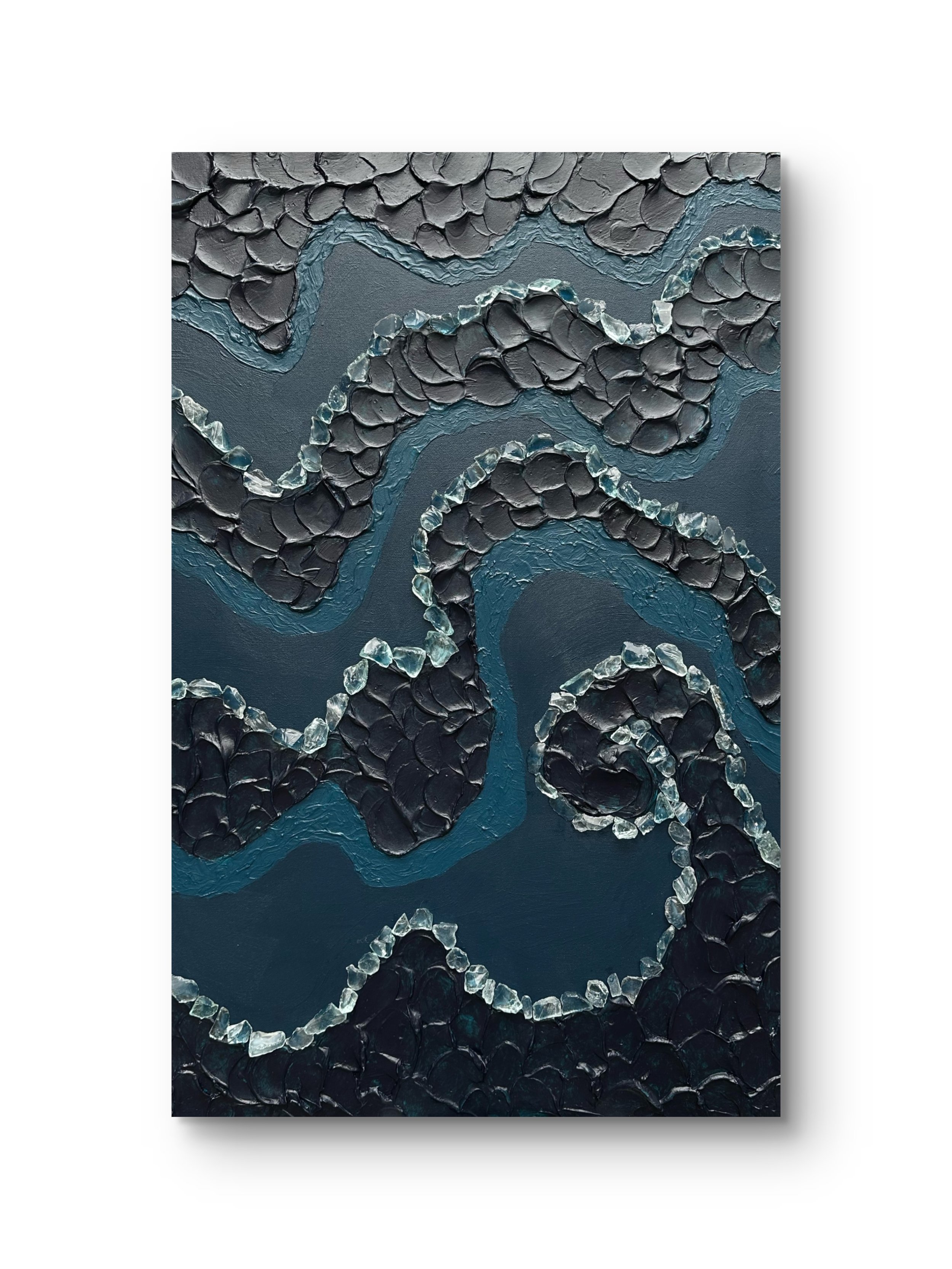
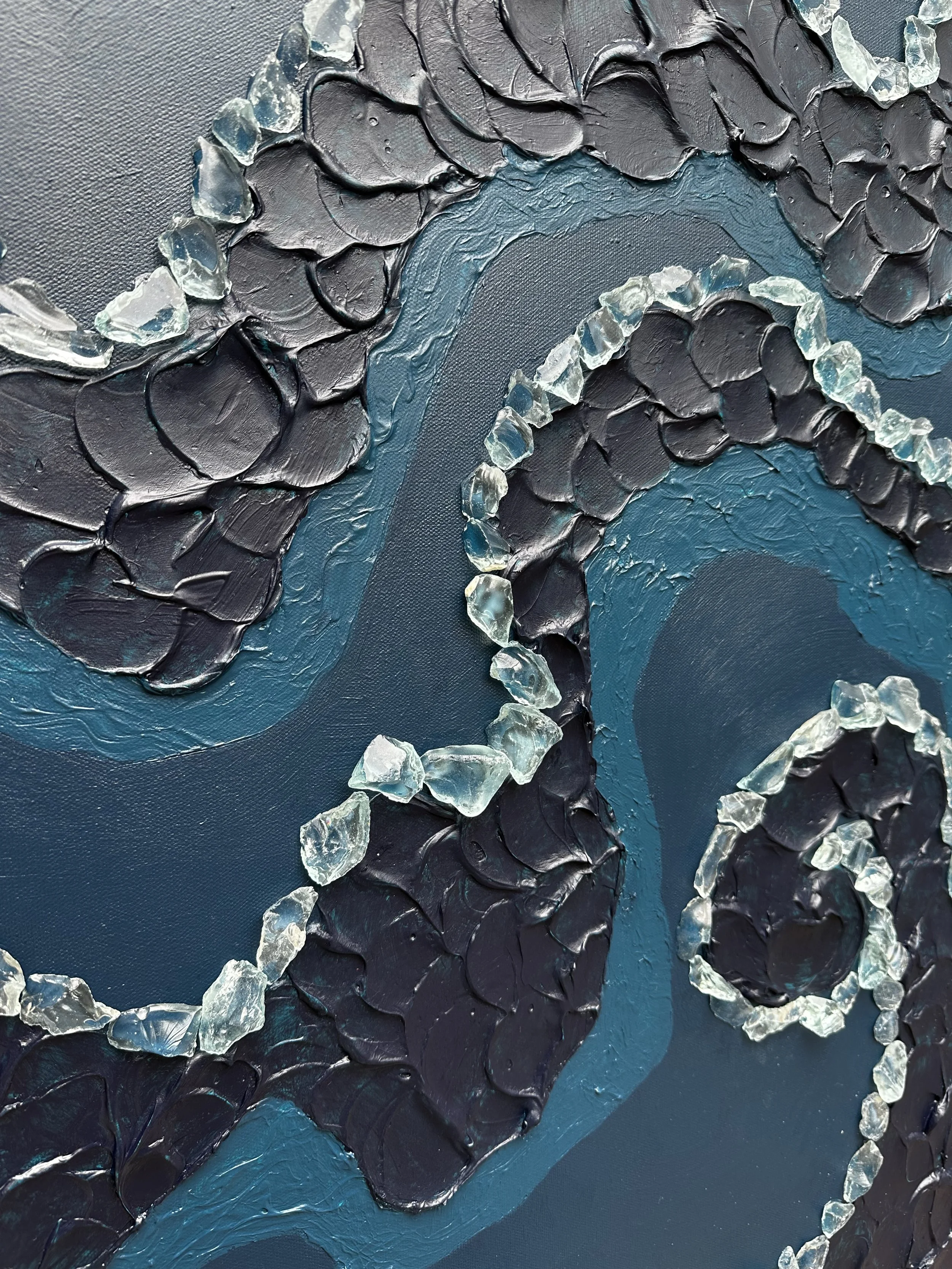
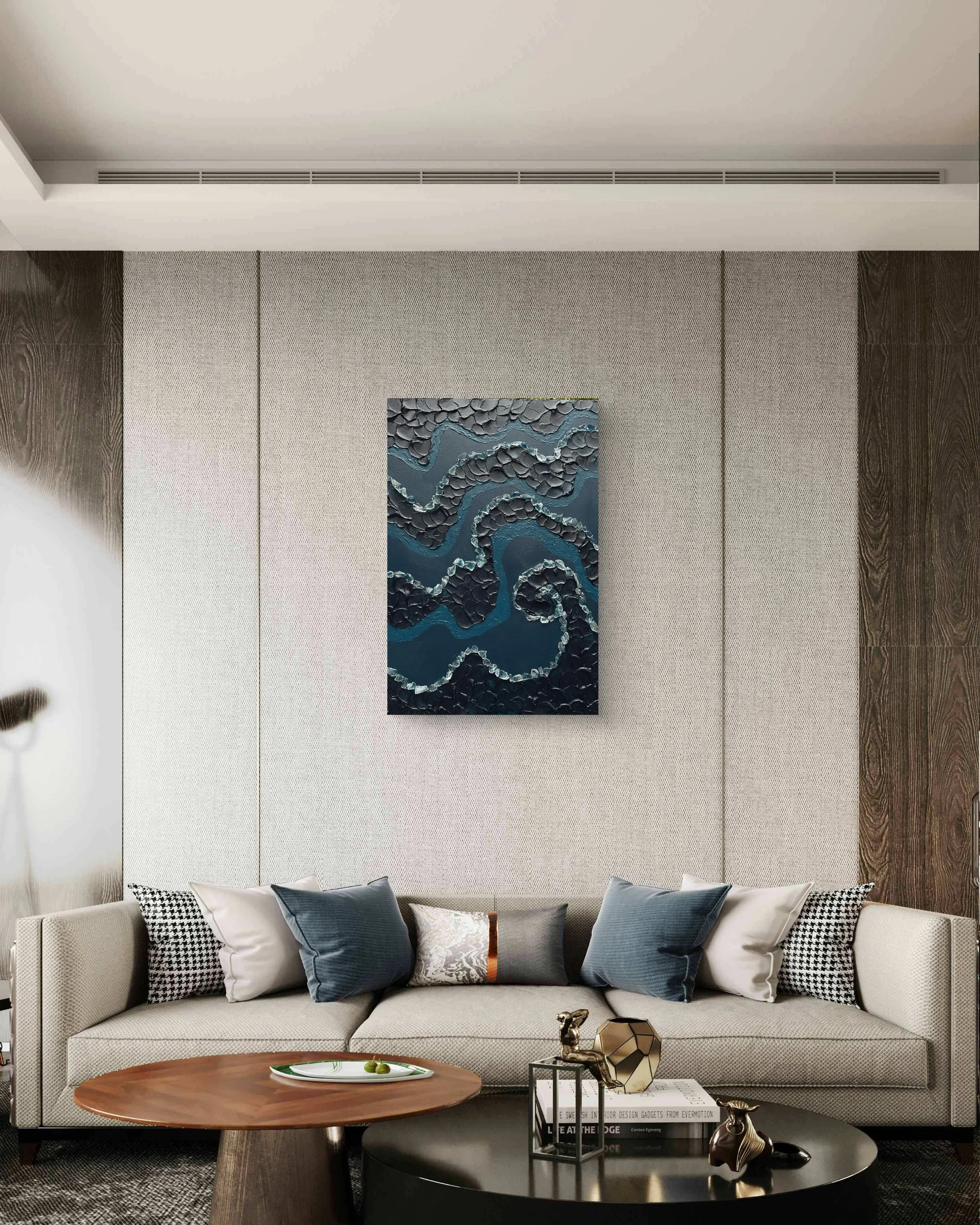
2026, 24×36in, acrylic paint, modeling paste, and sea glass.
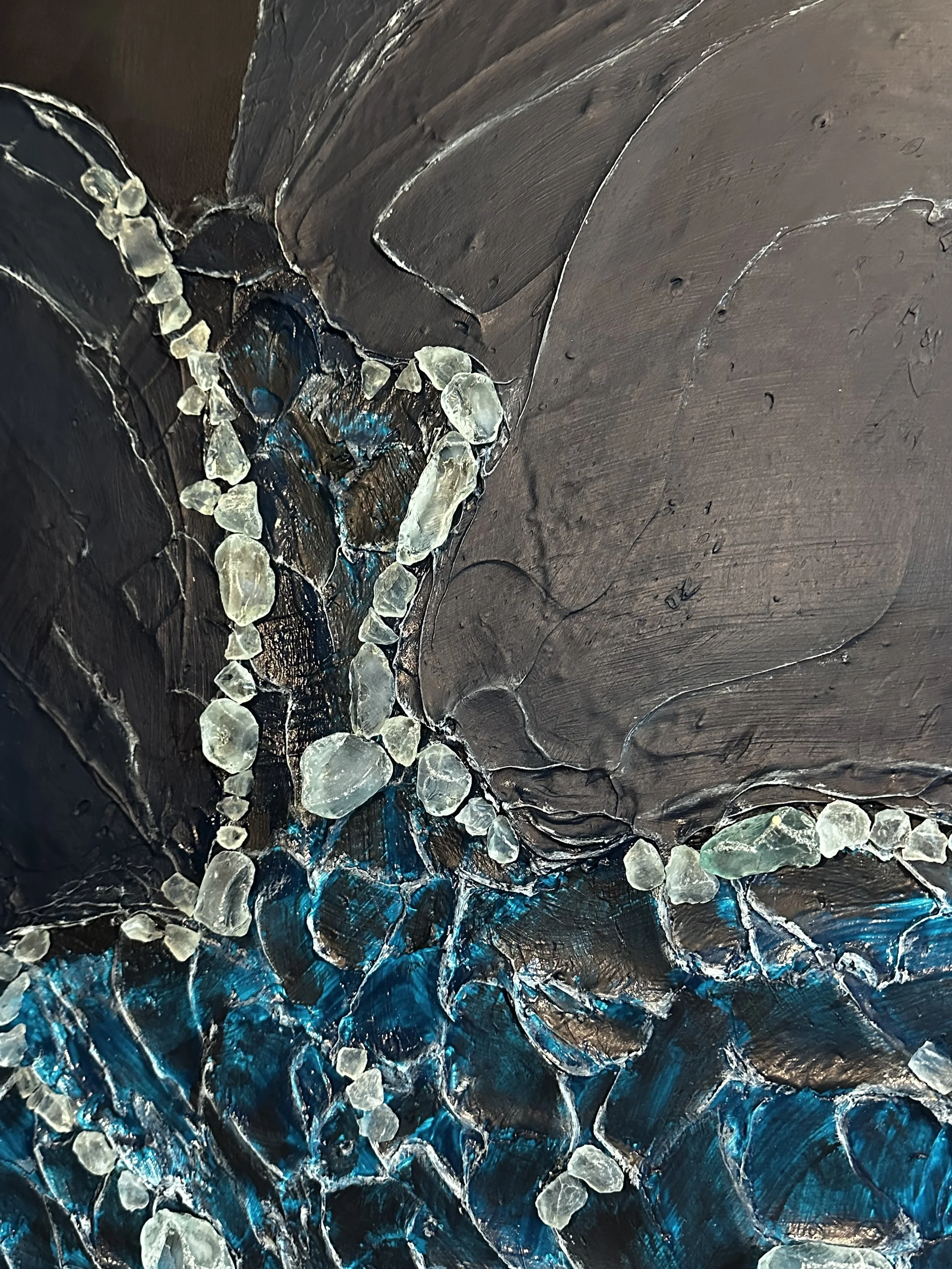
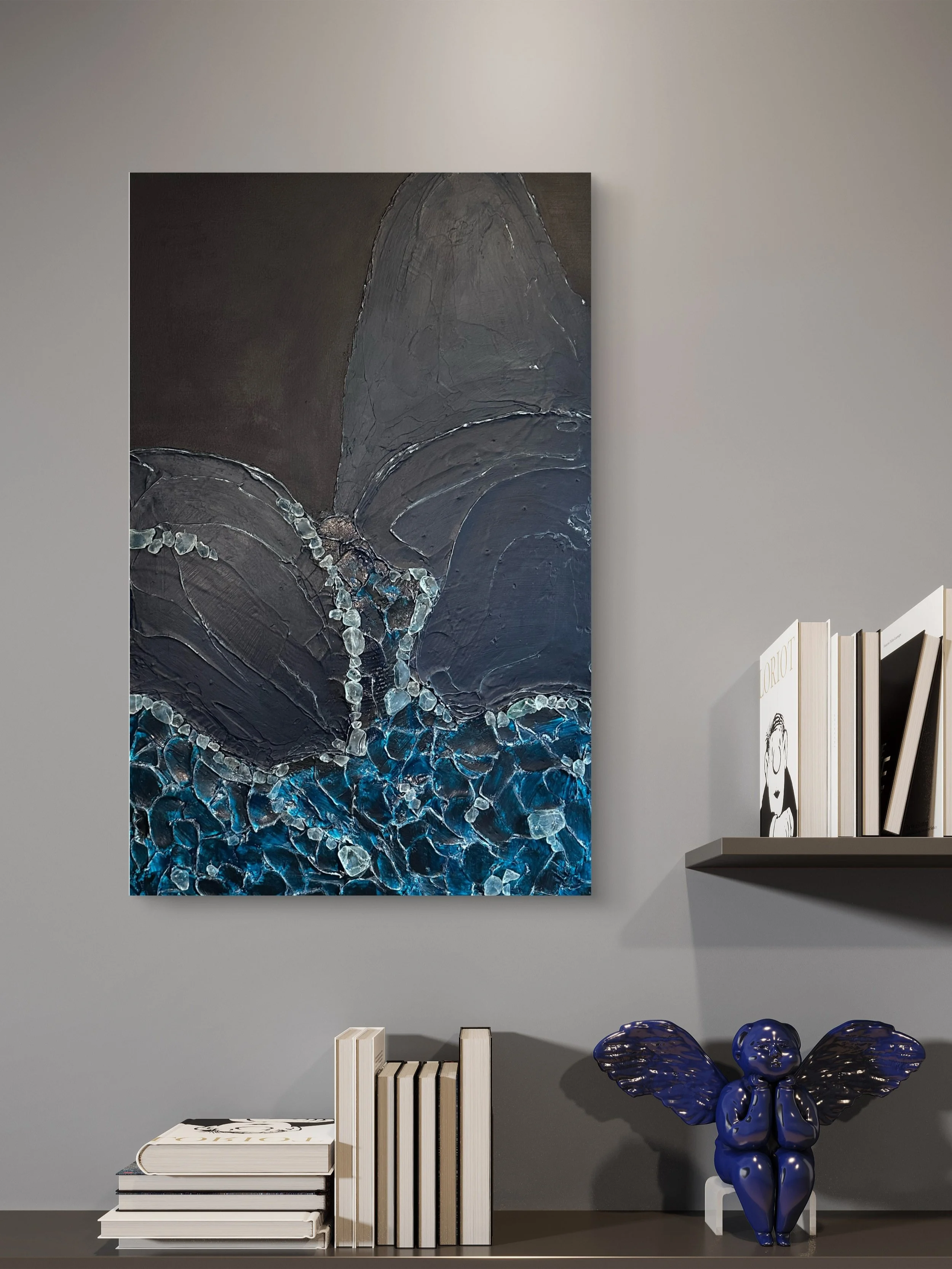
Chronic pain can feel like a world that is slowly closing in around you. It weaves itself through the body and mind, tightening its grip, narrowing the space to breathe, to move, and simply to exist without its presence.
In Constrict, winding channels push through layers of dark, hardened texture, caught between opposing forces with little room to escape. The raised, overlapping forms evoke the relentless pressure of pain that persists beneath the surface, while the fragile, almost crystalline edges trace the struggle to find space within it.
There is an exhaustion in living with pain that never fully lets go — the feeling of being held captive within your own body, of fighting for room to breathe when even the simplest moments can feel overwhelming.
Constrict is an exploration of that confinement: the weight of what cannot always be seen, the tension of what cannot easily be released, and the quiet struggle to find space for yourself when pain seems to take up everything.
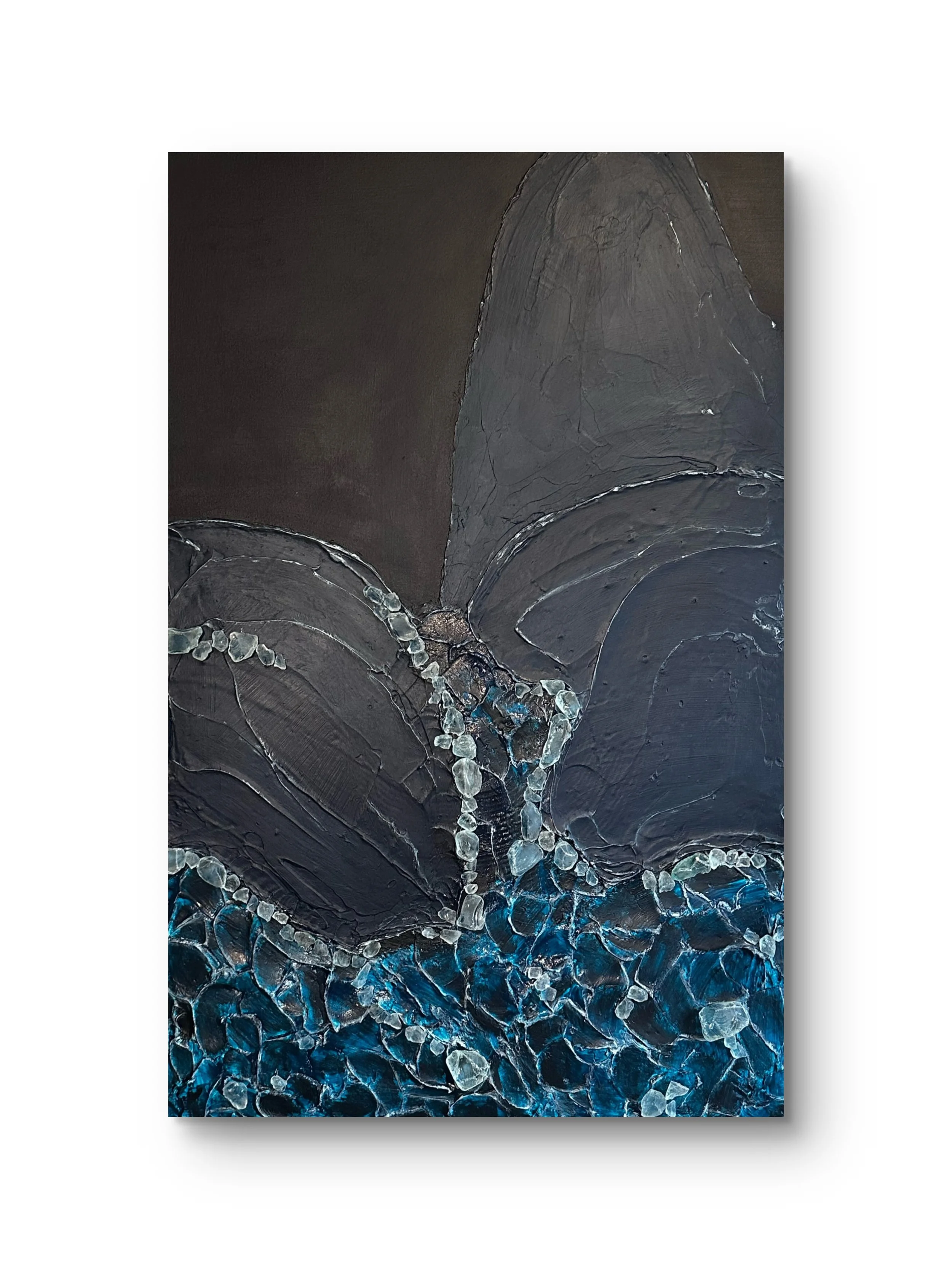
2026, 24×36in, acrylic paint, modeling paste, and sea glass.
Fragility explores the feeling of becoming fragmented under the weight of pain.
The broken, layered forms and jagged textures reflect the way chronic pain can leave me feeling—pieces of myself pulled apart, disconnected, and more delicate than I once felt. Yet within the fragmentation, there is still movement, depth, and beauty. The scattered sea glass becomes a quiet reminder that even broken pieces can hold something beautiful.
This piece is not only about feeling fragile. It is about what remains when you are broken into pieces—and the possibility of finding meaning, beauty, and strength within them.
Fragility is a reflection of the parts of ourselves that pain can change, and the pieces we learn to carry with us.
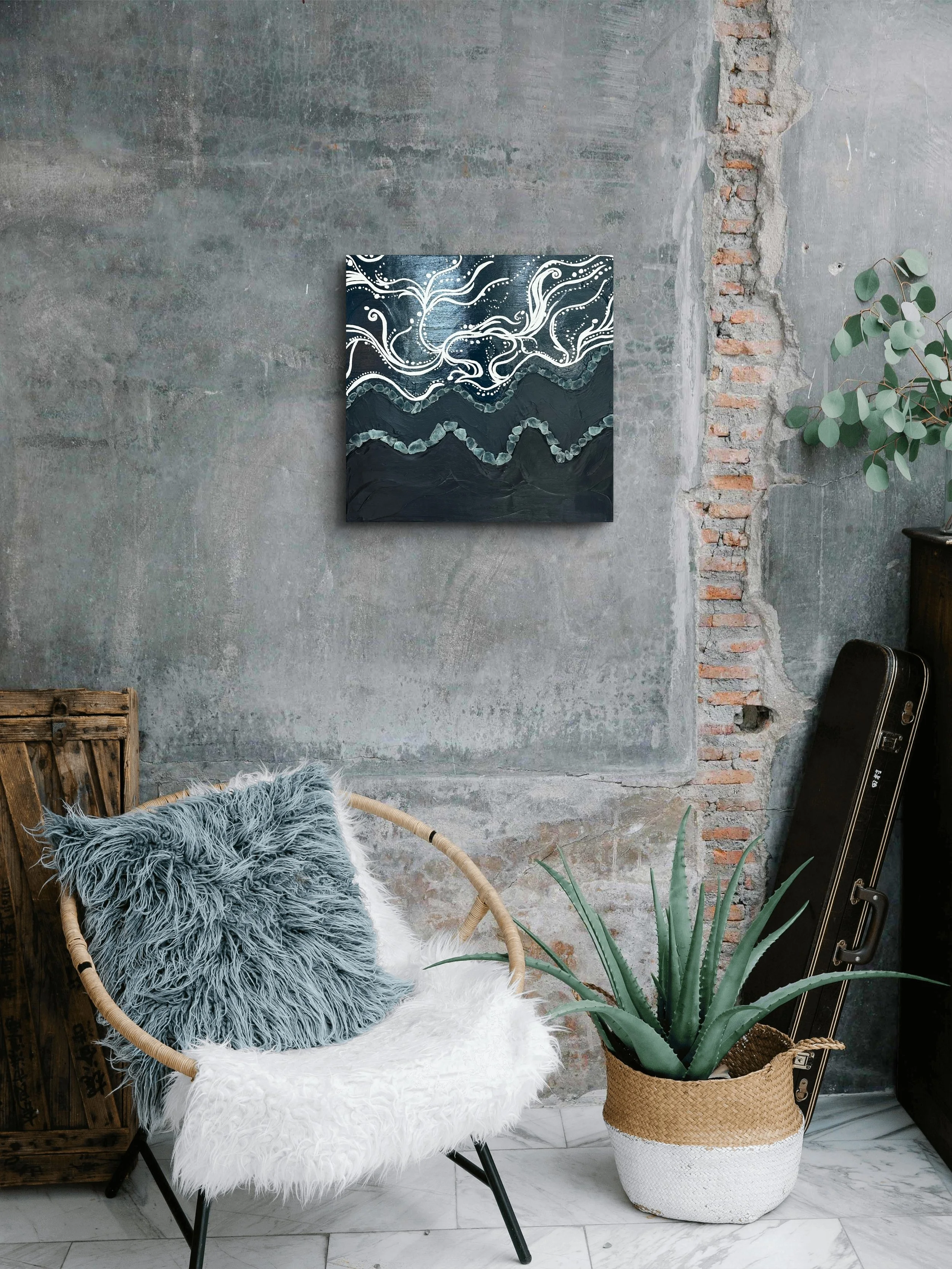
2026, 20×20in, acrylic paint, modeling paste, and sea glass.
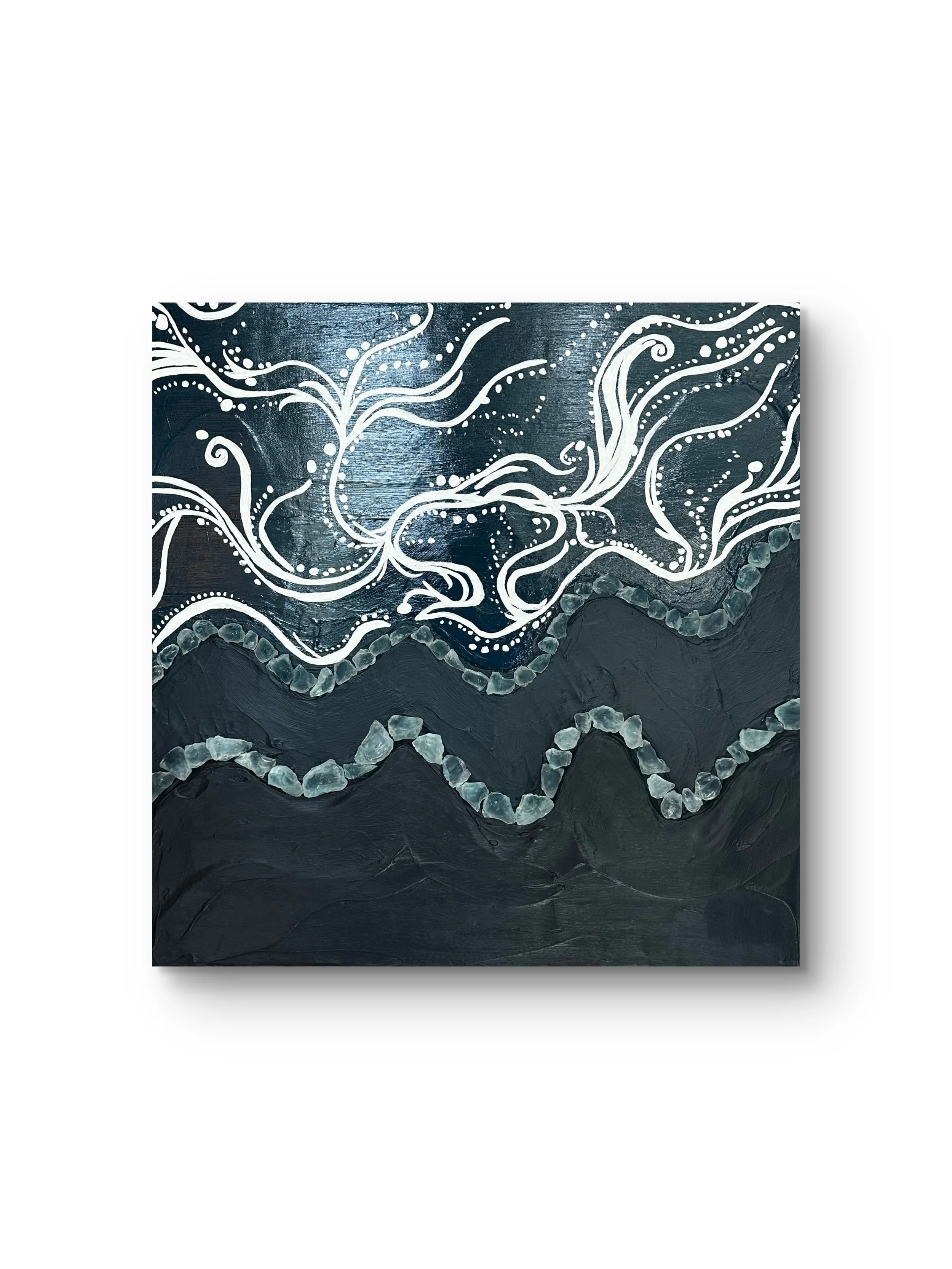
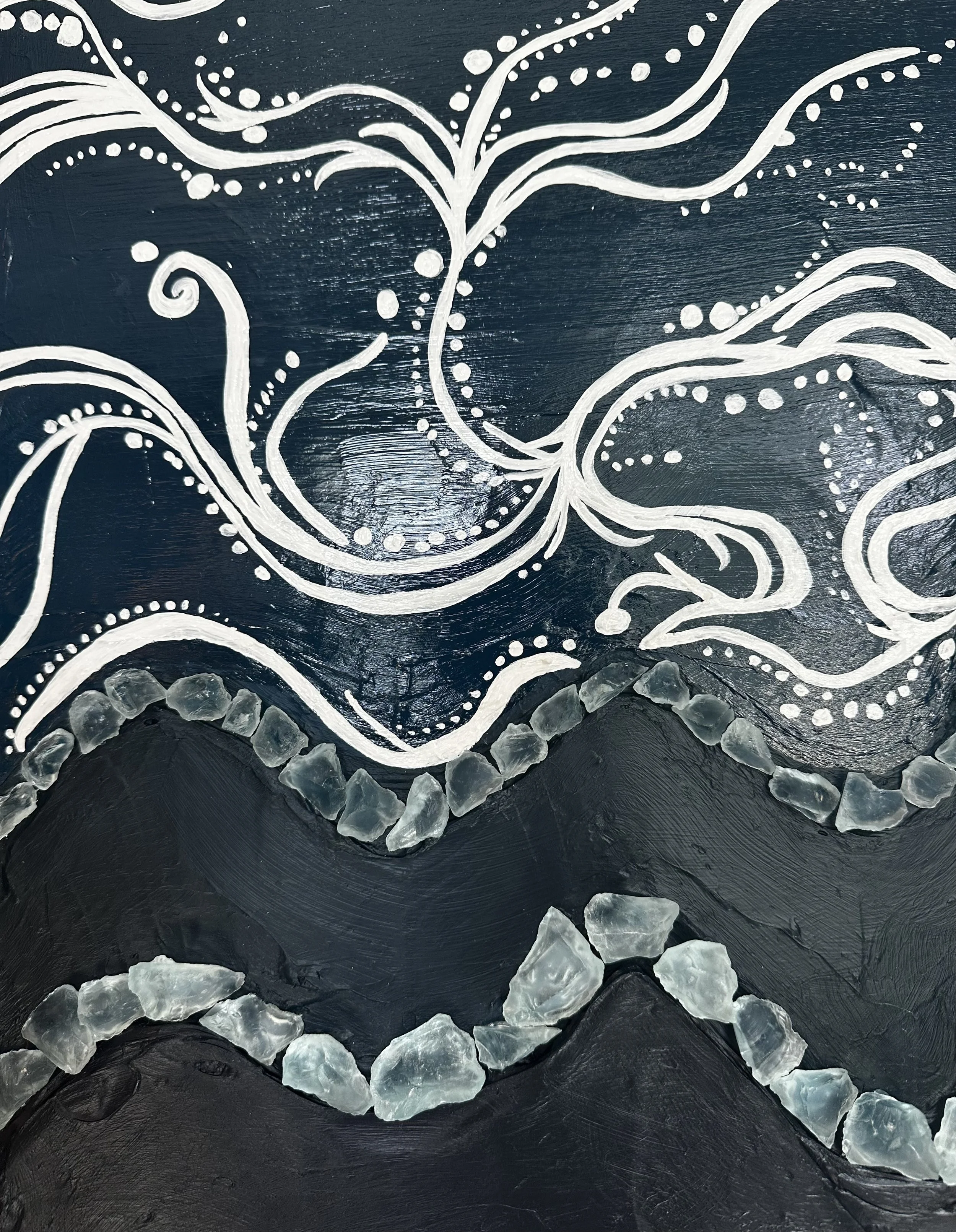
What does distress look like when it cannot always be put into words?
Distress is the second work in my Pain series, an exploration of the ways emotional and physical distress can manifest beneath the surface. Through organic forms, sculptural texture, contrast, and a darker palette, the work gives something inherently invisible a physical presence on canvas.
The layered surface reflects the way distress can settle in gradually—accumulating over time until what once felt temporary becomes something we carry with us. Rather than depicting a single moment of suffering, Distress considers the lingering nature of pain and the weight it can leave behind in both the mind and body.
The tension between the flowing organic forms and the physicality of the texture creates a sense of movement and resistance, reflecting the internal experience of carrying something that cannot always be expressed. Each layer becomes a visual representation of what lies beneath the surface: emotions, sensations, and experiences that may remain unseen by others, yet deeply shape our inner world.
With Distress, I wanted to create a space where the intangible could become tangible—a visual language for experiences that are often difficult to articulate, but deeply human.
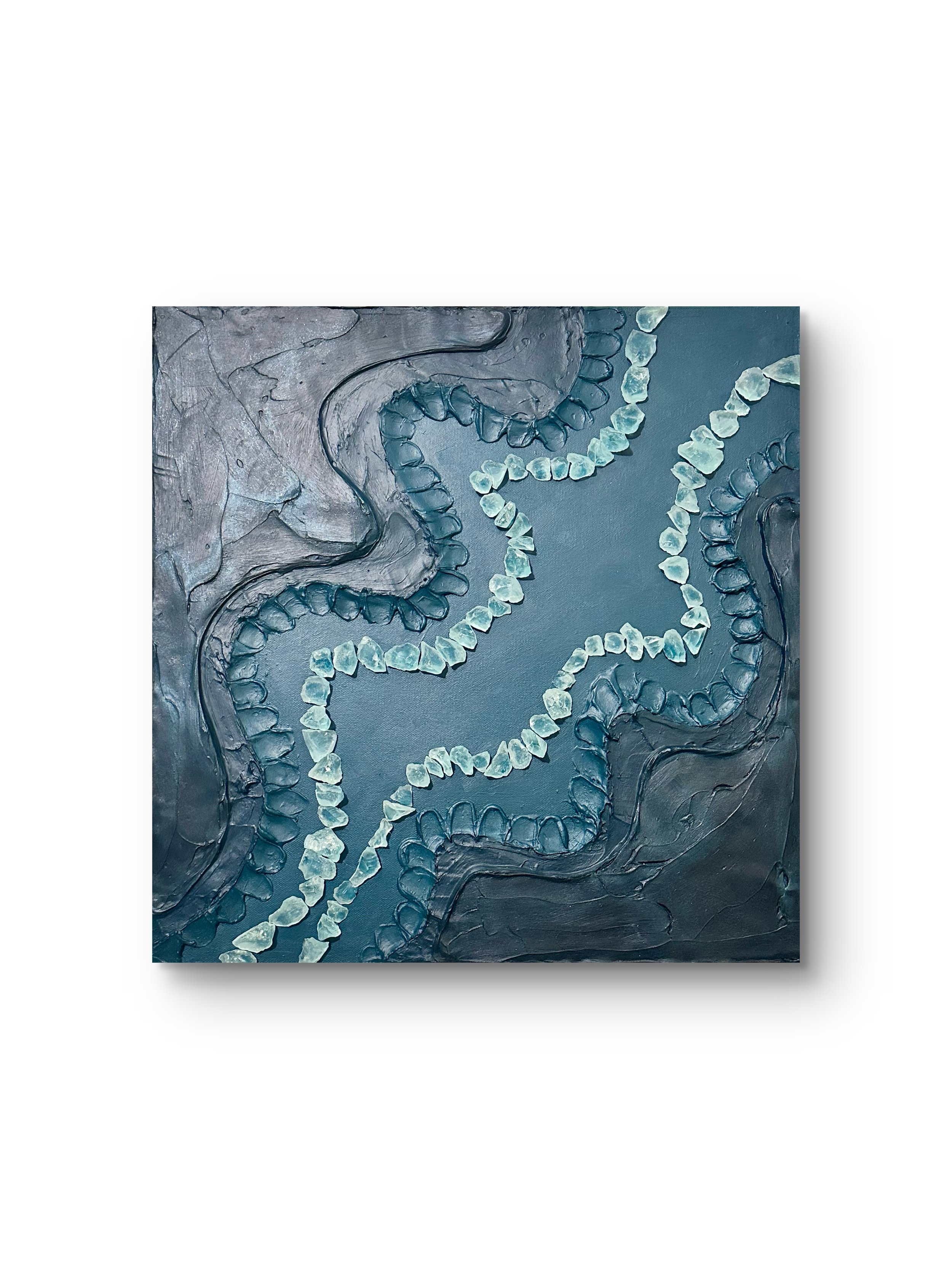
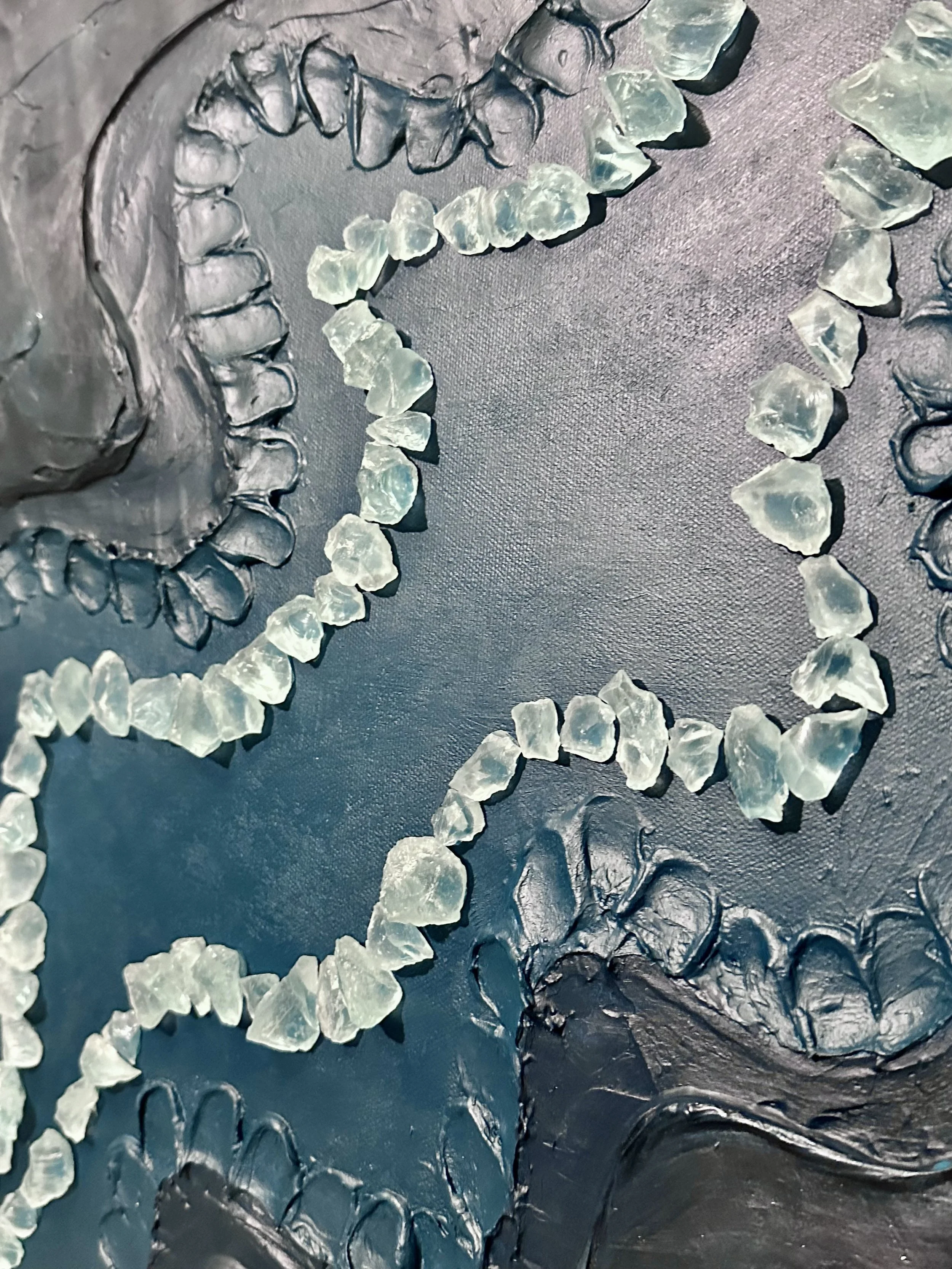
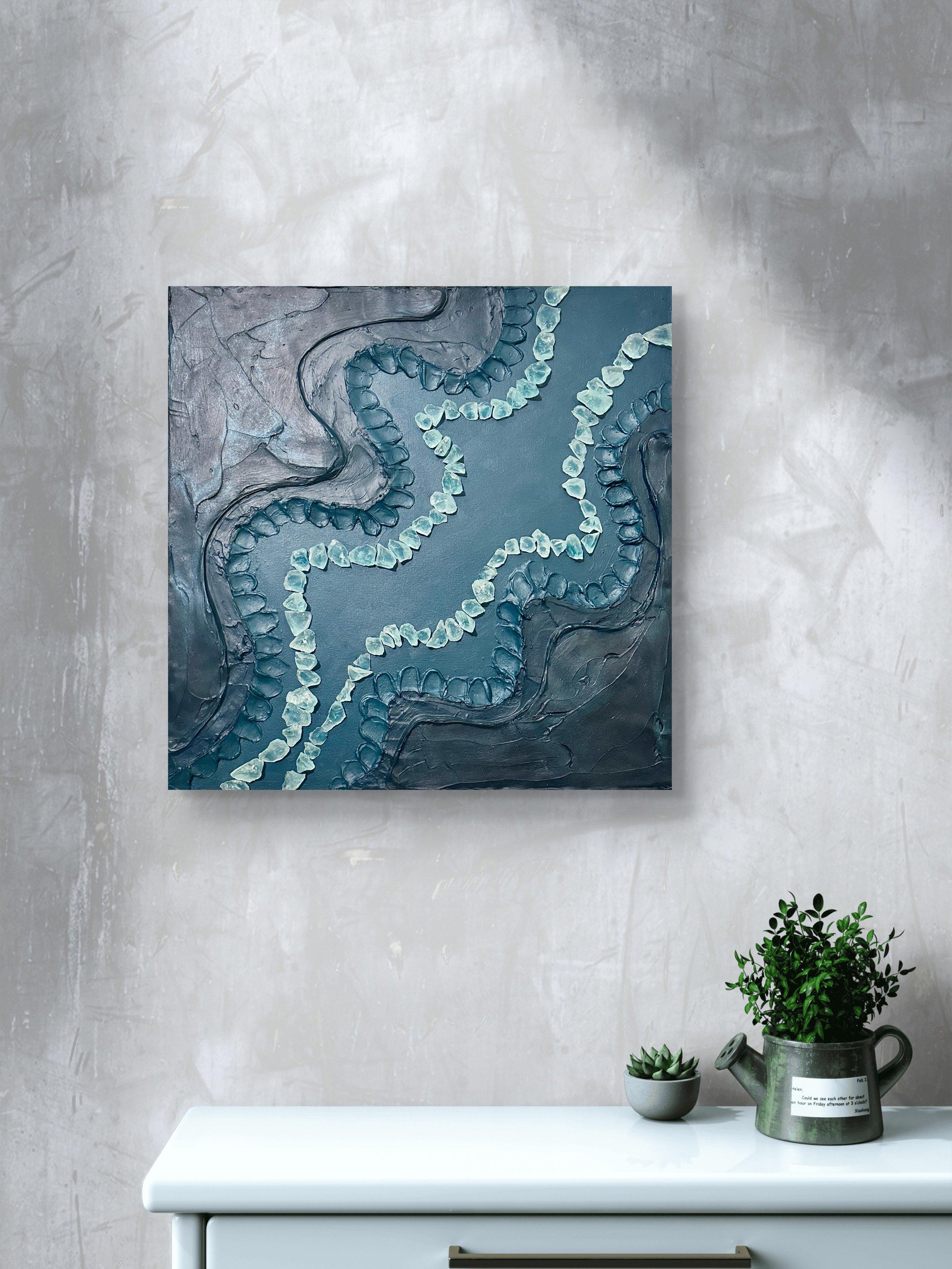
2026, 20×20in, acrylic paint, modeling paste, and sea glass on canvas.
Some experiences leave marks that cannot be seen.
Ache explores pain not as a singular experience, but as something that can exist in layers—within the mind, body, and soul. Through contrast, sculptural texture, and organic forms, the work reflects the shifting nature of pain: sometimes heavy and consuming, other times quieter and more subdued, yet continually shaping the way we experience ourselves and the world around us.
Each layer was intentionally built to create a sense of depth, tension, and movement. The physical texture becomes a reflection of the emotional weight carried beneath the surface, while the organic forms suggest the ways pain can evolve, recede, and resurface over time.
At the heart of Ache is the relationship between suffering and resilience. Even within difficult experiences, there can be movement, growth, and the possibility of healing. The work invites the viewer to consider the unseen layers of their own experiences—and the ways those experiences can ultimately shape who we become.
Ache is the first work in my newest collection, debuting January 1–February 27, 2027, at the Mann Center for the Arts in Sanford, North Carolina.
No results match your search. Try removing a few filters.

