

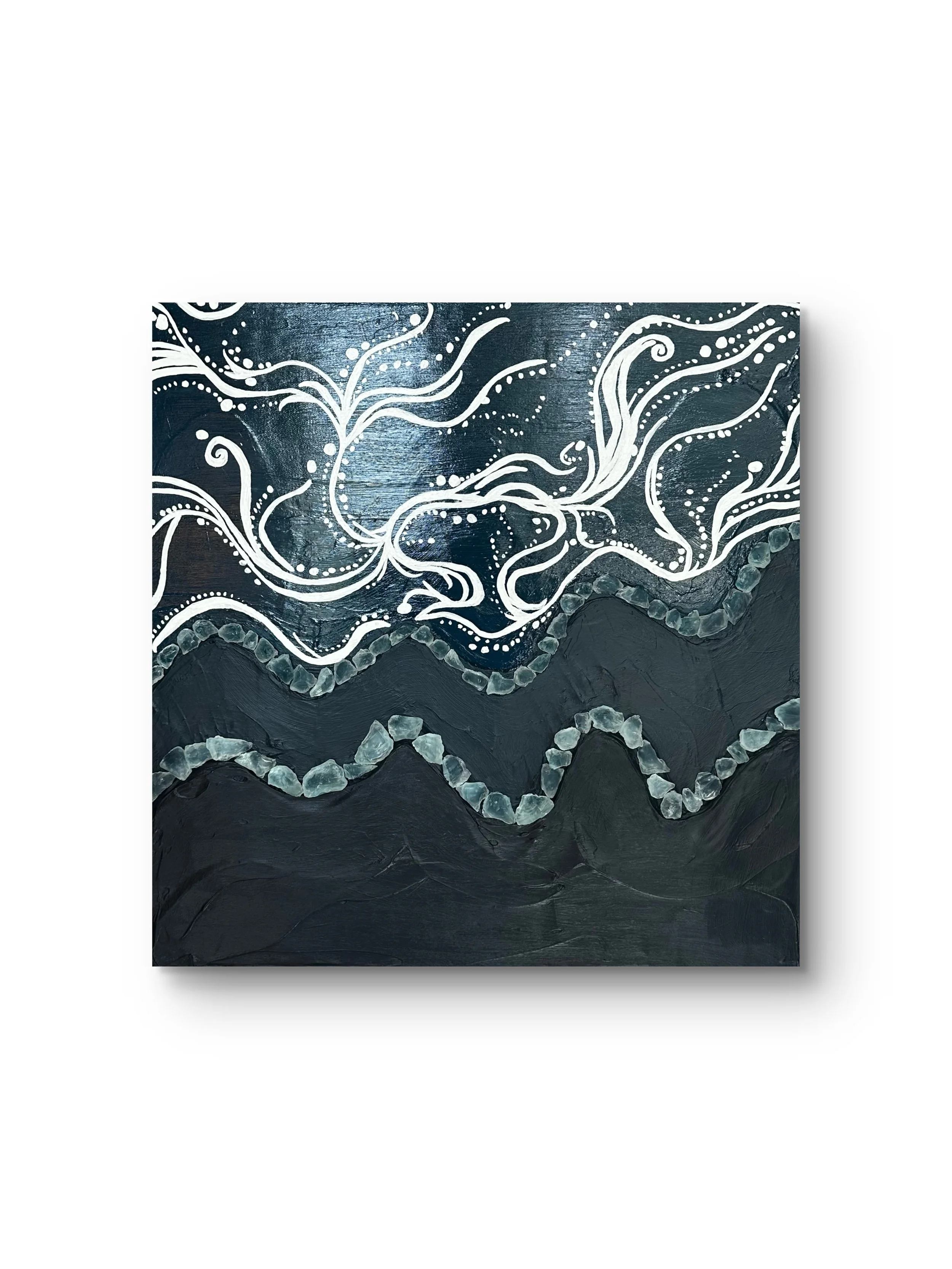
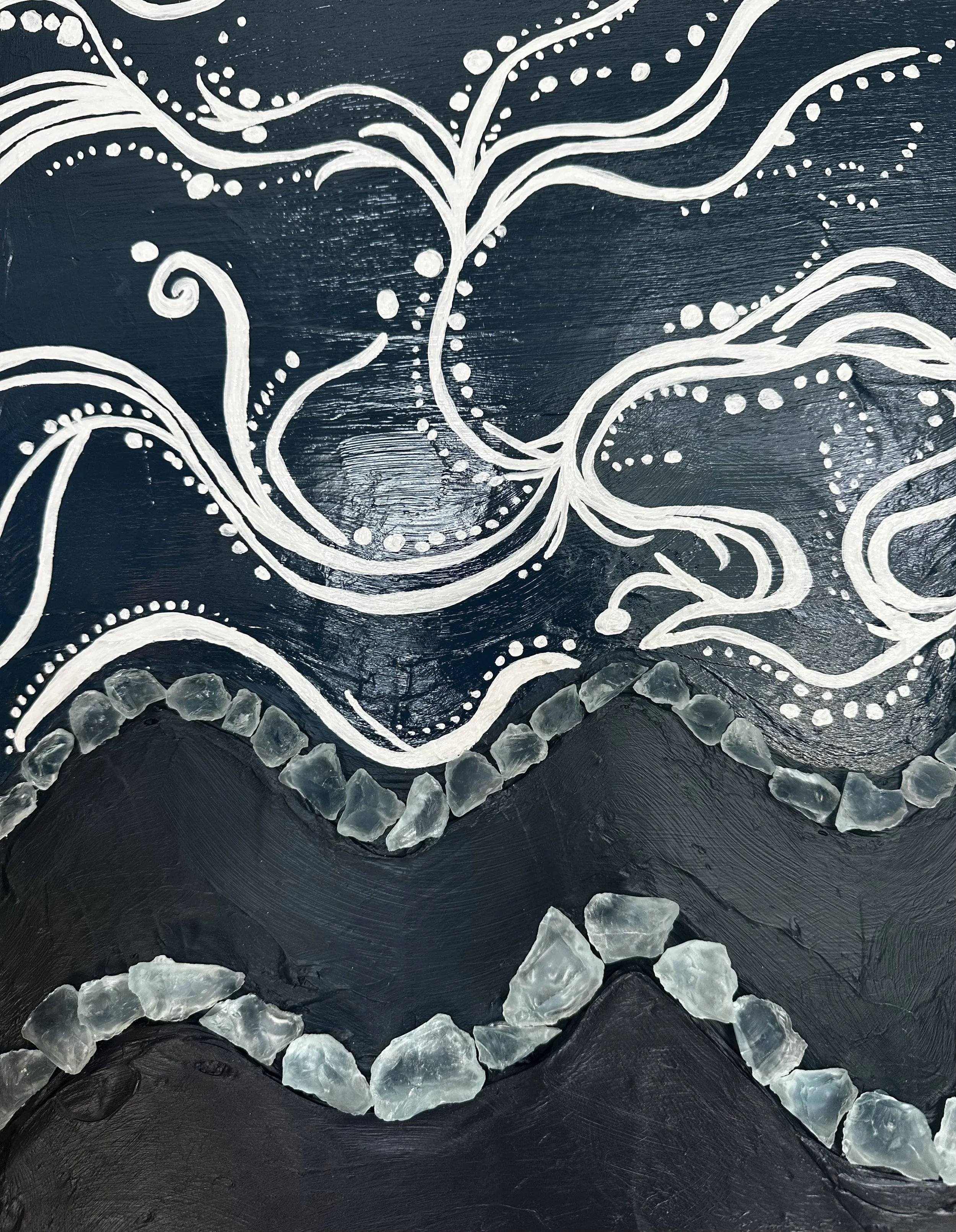
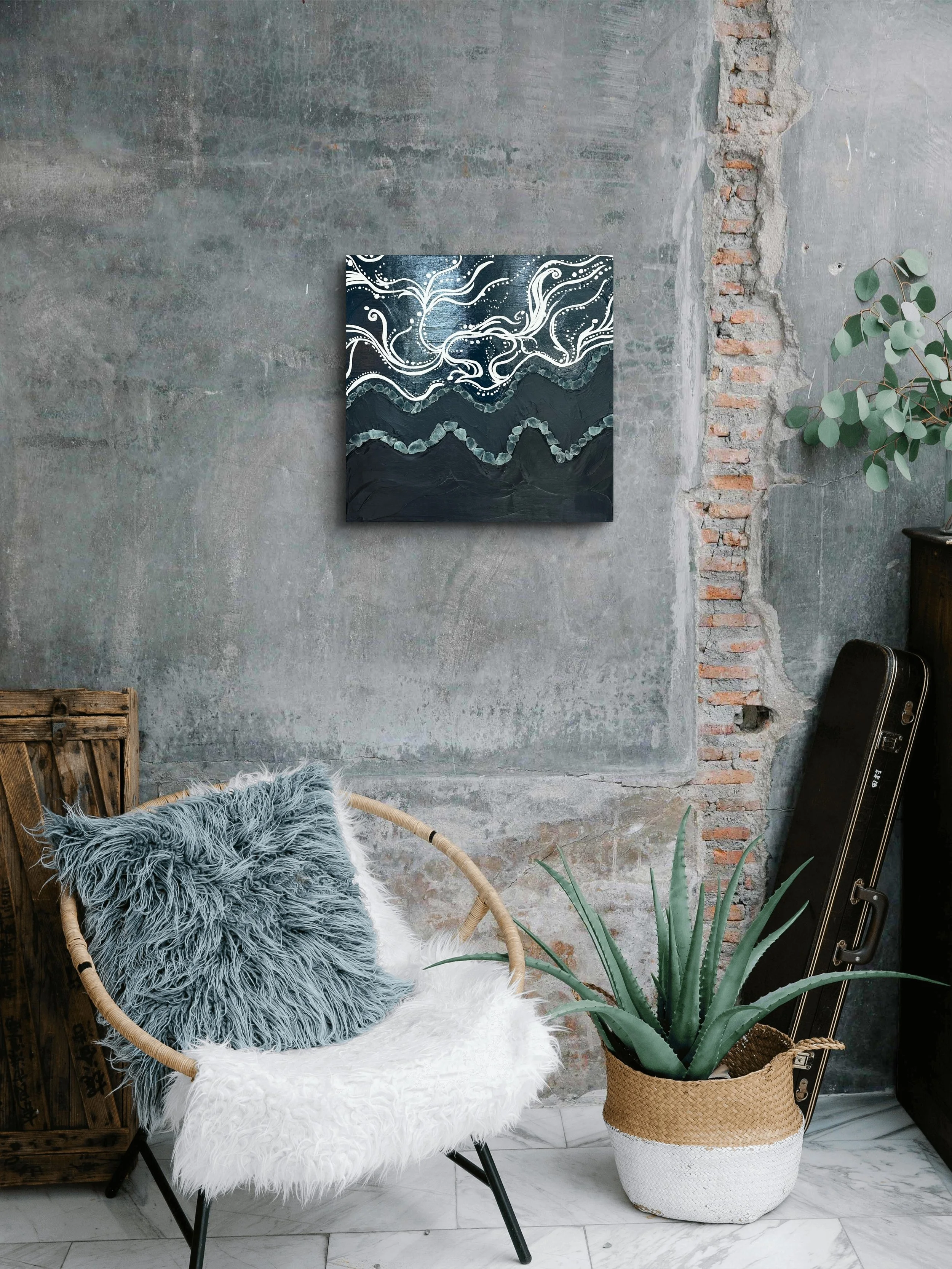
2026, 20×20in, acrylic paint, modeling paste, and sea glass.
What does distress look like when it cannot always be put into words?
Distress is the second work in my Pain series, an exploration of the ways emotional and physical distress can manifest beneath the surface. Through organic forms, sculptural texture, contrast, and a darker palette, the work gives something inherently invisible a physical presence on canvas.
The layered surface reflects the way distress can settle in gradually—accumulating over time until what once felt temporary becomes something we carry with us. Rather than depicting a single moment of suffering, Distress considers the lingering nature of pain and the weight it can leave behind in both the mind and body.
The tension between the flowing organic forms and the physicality of the texture creates a sense of movement and resistance, reflecting the internal experience of carrying something that cannot always be expressed. Each layer becomes a visual representation of what lies beneath the surface: emotions, sensations, and experiences that may remain unseen by others, yet deeply shape our inner world.
With Distress, I wanted to create a space where the intangible could become tangible—a visual language for experiences that are often difficult to articulate, but deeply human.
2026, 20×20in, acrylic paint, modeling paste, and sea glass.
What does distress look like when it cannot always be put into words?
Distress is the second work in my Pain series, an exploration of the ways emotional and physical distress can manifest beneath the surface. Through organic forms, sculptural texture, contrast, and a darker palette, the work gives something inherently invisible a physical presence on canvas.
The layered surface reflects the way distress can settle in gradually—accumulating over time until what once felt temporary becomes something we carry with us. Rather than depicting a single moment of suffering, Distress considers the lingering nature of pain and the weight it can leave behind in both the mind and body.
The tension between the flowing organic forms and the physicality of the texture creates a sense of movement and resistance, reflecting the internal experience of carrying something that cannot always be expressed. Each layer becomes a visual representation of what lies beneath the surface: emotions, sensations, and experiences that may remain unseen by others, yet deeply shape our inner world.
With Distress, I wanted to create a space where the intangible could become tangible—a visual language for experiences that are often difficult to articulate, but deeply human.